


Orders placed before 12 noon
are usually dispatched on the same day (no dispatch on Fridays)
Testosterone Rapid Test for BIOspeed – Quantitative Measurement
EAN: 06974464591609
Article number
5454C4X024
Packaging unit
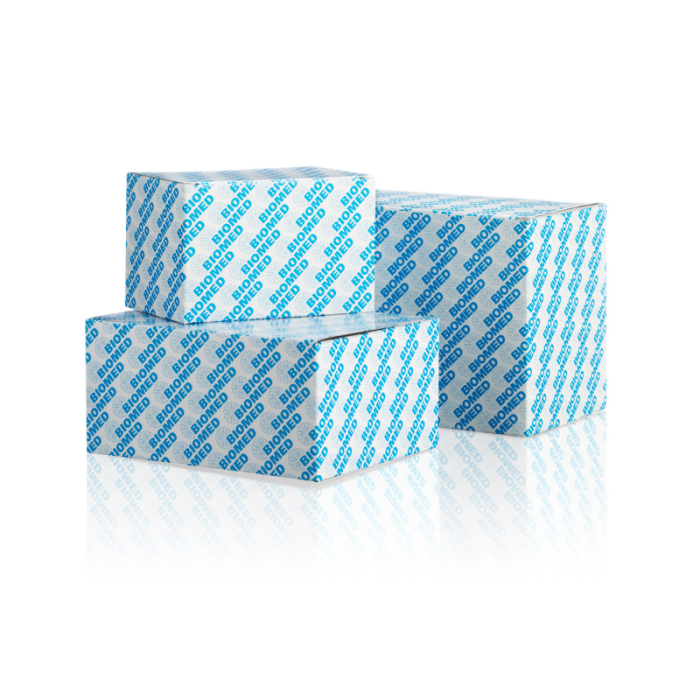
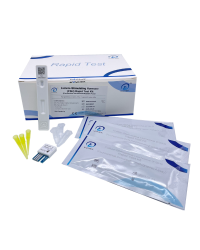
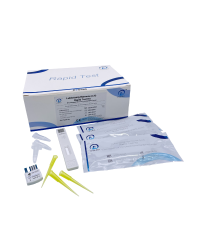
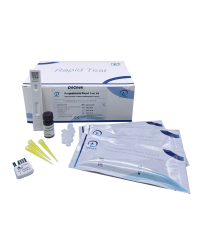
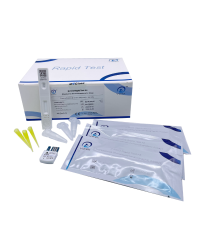
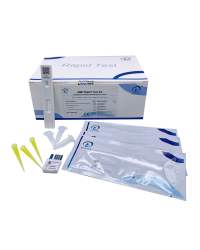
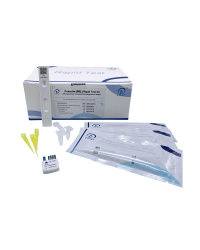
24 Testkassetten, 24 Pipettenspitzen, 1 ID Chip, 1x Probenverdünnungspuffer, Probenröhrchen mit Lyophilisat
Quantitative rapid test for the determination of testosterone in human serum, plasma and whole blood using a fluorescence immunoassay with the BIOspeed analyser.
€99.00
Excl. 19% VAT ,
excl. Shipping Cost
Testosterone Rapid Test – Quantitative Testosterone Measurement with BIOspeed
The BIOMED BIOspeed Testosterone Rapid Test Kit is a quantitative competitive immunochromatographic fluorescence immunoassay for the determination of testosterone concentrations in human serum, plasma and whole blood.
With a sample volume of only 50 µL, an incubation time of 10 minutes and a linearity range of 0.2–15 ng/mL, the BIOspeed Testosterone Rapid Test supports timely quantitative hormone testing at the point of care.
Quantitative testosterone measurement serves as a diagnostic aid in the investigation of polycystic ovary syndrome (PCOS) and androgen-related disorders in women, as well as hypogonadism and certain chromosomal abnormalities in men.
The assay is evaluated using the BIOspeed fluorescence immunoassay analyser. Testosterone concentrations are calculated from the measured fluorescence signal using a lot-specific calibration curve and reported as quantitative results.
The test kit is intended exclusively for professional in vitro diagnostic use by appropriately trained healthcare personnel in clinical laboratories, hospitals, endocrinology, gynaecology, urology and andrology practices.
What Are the Key Benefits of the BIOspeed Testosterone Rapid Test?
- Quantitative testosterone measurement: Direct reporting of testosterone concentrations in ng/mL rather than qualitative results.
- 10-minute incubation time: Supports timely hormone testing at the point of care.
- Low sample volume: Only 50 µL of patient specimen required.
- Flexible specimen types: Suitable for human serum, plasma and venous whole blood.
- Linearity range of 0.2–15 ng/mL: Quantitative measurement across the evaluated concentration range.
- Analytical detection limit of 0.2 ng/mL.
- Instrument-based fluorescence measurement: No subjective visual interpretation of test lines required.
- Lot-specific calibration: Automatic concentration calculation using calibration data stored on the ID chip.
- Integrated procedural control: Automatic internal quality control during each patient measurement.
- Digital result management: Results can be displayed, stored and printed.
- 24 tests per kit: Includes the reagents required for sample preparation.
What Is the Clinical Significance of Testosterone in Hormone Diagnostics?
Testosterone is a steroid hormone belonging to the androgen group and plays an essential physiological role in both men and women.
In men, testosterone is produced predominantly by the Leydig cells of the testes. In women, testosterone is produced in smaller quantities by the ovaries and adrenal glands, as well as through the peripheral conversion of other steroid hormones.
Testosterone contributes to the regulation of sexual function, reproductive health, muscle and bone metabolism and erythropoiesis.
Abnormal testosterone concentrations may indicate disturbances in gonadal function or endocrine regulation. Quantitative testosterone measurement is therefore an important component of laboratory diagnostics in endocrinology, andrology, urology and gynaecology.
When Is Quantitative Testosterone Testing Clinically Relevant?
Testosterone measurement provides valuable laboratory information in the investigation of various endocrine disorders. The clinical indications and interpretation of results differ between male and female patients.
Testosterone Testing in Men – Investigation of Hypogonadism and Androgen Deficiency
Male hypogonadism may be associated with reduced testosterone production and impaired gonadal function.
Potential clinical manifestations of testosterone deficiency include:
- Reduced libido and impaired sexual function
- Decreased muscle mass and muscle strength
- Reduced bone mineral density
- Fertility disorders
- Reduced physical performance
Quantitative testosterone measurement supports the diagnostic investigation of suspected androgen deficiency in patients presenting with compatible clinical symptoms.
Additional hormone measurements may help differentiate between primary and secondary hypogonadism. In particular, the complementary determination of luteinising hormone (LH) and follicle-stimulating hormone (FSH) provides further information about endocrine regulation and gonadal function.
However, a single low testosterone result is insufficient to establish a diagnosis of hypogonadism. Diagnostic assessment requires consideration of clinical symptoms, specimen collection time and, where appropriate, repeated hormone measurements.
Testosterone Testing in Women – PCOS and Hyperandrogenism
Quantitative testosterone measurement is also an important component of gynaecological endocrinology.
Elevated androgen concentrations may be associated with polycystic ovary syndrome (PCOS) and other androgen-related disorders.
Potential clinical manifestations of hyperandrogenism include:
- Hirsutism
- Acne
- Androgenetic alopecia
- Menstrual and ovulatory disorders
- Fertility problems
Measurement of testosterone concentrations can contribute to the laboratory investigation of suspected androgen-related disorders.
Depending on the clinical indication, additional hormone parameters such as LH, FSH and progesterone may provide complementary diagnostic information.
Due to the physiologically lower testosterone concentrations in women, the analytical limitations of the measurement method must be carefully considered. More specific analytical methods, particularly liquid chromatography-tandem mass spectrometry (LC-MS/MS), are preferred for the further investigation of biochemical hyperandrogenism.
The diagnosis of PCOS cannot be established from a single testosterone measurement and requires comprehensive assessment of the clinical and hormonal findings.
How Does the Quantitative Testosterone Rapid Test Work?
The BIOspeed Testosterone Rapid Test Kit is based on a competitive immunochromatographic fluorescence immunoassay (FIA).
Unlike sandwich immunoassays, this method uses a competitive antibody reaction to determine the concentration of testosterone in the patient specimen.
During sample preparation, testosterone present in the specimen binds to fluorescence-labelled anti-testosterone detector antibodies.
After the prepared sample has been applied to the test cassette, the reaction components migrate along the nitrocellulose membrane by capillary action.
Unbound fluorescence-labelled antibodies are captured by immobilised testosterone antigens in the test line region.
How Does the Fluorescence Signal Relate to Testosterone Concentration?
In a competitive testosterone immunoassay, the measured fluorescence intensity is inversely related to the testosterone concentration in the patient specimen.
- Higher testosterone concentrations produce lower fluorescence intensity at the test line.
- Lower testosterone concentrations produce higher fluorescence intensity at the test line.
The BIOspeed fluorescence immunoassay analyser measures the fluorescence signal and calculates the testosterone concentration using the lot-specific calibration curve.
The system therefore provides a quantitative concentration value rather than simply indicating whether a predefined threshold has been exceeded.
How Quickly Can Testosterone Be Measured with BIOspeed?
Only 50 µL of serum, plasma or whole blood is required for quantitative testosterone measurement.
Following sample preparation using the sample dilution buffer and lyophilised reagent, 75 µL of the prepared sample is applied to the test cassette.
The BIOspeed system offers two incubation options.
Onboard Incubation
The test cassette is inserted into the BIOspeed analyser immediately after sample application.
The analyser automatically controls the 10-minute incubation period and subsequently performs the quantitative measurement.
External Incubation
Alternatively, the test cassette can be incubated outside the analyser for 10 minutes and then immediately inserted into the BIOspeed analyser for quantitative evaluation.
These two incubation options support flexible diagnostic workflows and allow healthcare professionals to organise testing according to their operational requirements.
The measured testosterone concentration is displayed directly on the analyser. Results can also be stored and printed.
Quantitative Testosterone Testing with the BIOspeed Analytical System
The Testosterone Rapid Test Kit extends the BIOspeed assay portfolio with an important parameter for quantitative hormone diagnostics.
The BIOspeed product range includes two fluorescence immunoassay analysers designed for different testing requirements.
BIOspeed Single – On-Demand Quantitative Testing
The BIOspeed Single is a compact fluorescence immunoassay analyser designed for on-demand individual measurements.
BIOspeed Multi – Parallel Quantitative Testing
The BIOspeed Multi features six test channels for parallel processing of multiple assays. It is particularly relevant for healthcare facilities with regular or higher sample throughput requirements.
Further information about the BIOspeed analytical system and available rapid test kits can be found in our Point-of-Care Analysers and Accessories category.
Which Specimens Can Be Used for the Testosterone Rapid Test?
The BIOspeed Testosterone Rapid Test Kit is intended for quantitative analysis of the following human specimen types:
- Serum
- Plasma
- Venous whole blood
Sodium citrate is used as the anticoagulant for plasma and whole blood specimens.
The required sample volume is only 50 µL, irrespective of the selected specimen type.
When whole blood is used, prior separation of cellular blood components is not required. This provides additional flexibility when integrating testosterone measurement into point-of-care diagnostic workflows.
Which Preanalytical Factors Should Be Considered?
Blood specimens are collected by venepuncture using standard clinical procedures.
Serum and plasma should be separated from cellular blood components as soon as possible.
Visibly haemolysed, lipaemic or icteric specimens are unsuitable for testing.
Patient specimens and test components must reach a temperature of +18 to +26 °C before measurement.
When investigating suspected male hypogonadism, specimen collection time is particularly relevant because testosterone concentrations may exhibit diurnal variation.
Analytical Performance of the BIOspeed Testosterone Rapid Test
The analytical performance characteristics of the BIOspeed Testosterone Rapid Test Kit have been evaluated using internal reference standards.
Linearity Range and Analytical Detection Limit
- Linearity range: 0.2–15 ng/mL
- Linear correlation coefficient (r): ≥ 0.9900
- Analytical detection limit: 0.2 ng/mL
Accuracy and Precision
- Relative deviation: Within ±15%
- Repeatability: Coefficient of variation (CV) ≤ 15%
These performance characteristics describe the analytical properties of the assay under the evaluated conditions.
The analytical detection limit should not be interpreted as a separately validated limit of quantification. The method-specific analytical limitations must be considered when interpreting results, particularly at low testosterone concentrations.
Lot-Specific Calibration and Quality Assurance
Quantitative testosterone measurement requires a controlled relationship between the measured fluorescence signal and the corresponding hormone concentration.
Lot-Specific Calibration Using an ID Chip
Each BIOspeed Testosterone Rapid Test Kit includes a lot-specific ID chip containing information such as:
- Product identification
- Reagent lot information
- Calibration curve
- Measurement unit
- Incubation time
- Additional assay-specific data
- The BIOspeed analyser uses the stored calibration information to calculate the testosterone concentration from the measured fluorescence signal.
Matching the lot information of the test kit and the ID chip is essential for quantitative evaluation in accordance with the intended use of the assay.
Integrated Internal Procedural Control
An internal procedural control is automatically performed during each patient measurement.
This control verifies whether the test cassette has been correctly inserted and successfully read by the BIOspeed analyser.
If the internal control is invalid, the analyser displays an error message. Testing must then be repeated using a new test cassette.
The integrated procedural control does not replace external quality controls required as part of the laboratory's quality assurance procedures.
How Should Quantitative Testosterone Results Be Interpreted?
Testosterone concentrations are influenced by various biological, endocrine and preanalytical factors.
Relevant factors include:
- Age and sex
- Time of specimen collection
- Hormonal status
- Underlying medical conditions
- Medication-related effects
- Concentrations of hormone-binding proteins
Quantitative testosterone measurement provides a numerical laboratory result. Its clinical significance must be assessed in the context of the patient's individual clinical presentation.
What Is the Difference Between Total Testosterone and Free Testosterone?
Most circulating testosterone is bound to transport proteins, particularly sex hormone-binding globulin (SHBG) and albumin.
Only a small proportion circulates in its free form.
Changes in the concentrations of these binding proteins may affect the interpretation of total testosterone results.
The BIOspeed Testosterone Rapid Test Kit quantitatively determines testosterone concentrations but does not separately measure free testosterone.
Depending on the clinical indication, complementary measurements of hormone-binding proteins or other endocrine laboratory parameters may be required.
Why Are Method-Specific Reference Intervals Important?
Testosterone concentrations must be interpreted using appropriate method-specific reference intervals.
Due to age-related, sex-specific and population-dependent differences, clinical laboratories should verify the suitability of their reference intervals for the respective patient population.
Results obtained using different analytical methods are not necessarily directly interchangeable.
Quantitative Measurement of Testosterone and Other Reproductive Hormones
Endocrine regulation of gonadal function involves interactions between several hormones. Testosterone measurement alone may therefore be insufficient for the comprehensive investigation of certain endocrine disorders.
The BIOspeed analytical system offers additional quantitative rapid test kits that can complement testosterone measurement according to the clinical indication.
Luteinising Hormone (LH)
LH is an important regulator of gonadal hormone production. In men, it stimulates testosterone synthesis in the Leydig cells.
Combined assessment of LH and testosterone can support differentiation between primary and secondary disorders of gonadal function.
Discover the BIOspeed LH Rapid Test Kit.
Follicle-Stimulating Hormone (FSH)
FSH plays an essential role in the regulation of spermatogenesis and ovarian follicular development.
Complementary FSH measurement provides additional information about gonadal function and reproductive health.
Discover the BIOspeed FSH Rapid Test Kit.
Prolactin
Elevated prolactin concentrations may affect hypothalamic-pituitary-gonadal regulation and can be associated with reduced testosterone production.
Prolactin measurement may therefore provide additional diagnostic information in selected endocrine investigations.
Discover the BIOspeed Prolactin Rapid Test Kit.
Anti-Müllerian Hormone (AMH)
AMH is an important laboratory parameter in reproductive medicine and gynaecological endocrinology.
Discover the BIOspeed AMH Rapid Test Kit.
Progesterone
Progesterone measurement complements the assessment of female reproductive hormone status, particularly when investigating ovulation and corpus luteum function.
Discover the BIOspeed Progesterone Rapid Test Kit.
Beta-Human Chorionic Gonadotropin (β-hCG)
β-hCG is an important laboratory parameter in pregnancy-related diagnostic investigations.
Discover the BIOspeed β-hCG Rapid Test Kit.
The comprehensive BIOspeed assay portfolio allows healthcare professionals to investigate different endocrine parameters using a common analytical platform.
What Are the Diagnostic Limitations of the Testosterone Rapid Test?
The BIOspeed Testosterone Rapid Test is a quantitative immunoassay.
As with other immunological measurement methods, cross-reactivity, non-specific antibody binding, interfering specimen constituents and preanalytical factors may affect measurement results.
Technical errors or deviations during sample preparation may also lead to inaccurate results.
Additional investigations using alternative analytical methods may be required in cases of implausible results, low testosterone concentrations or discrepancies between laboratory findings and clinical presentation.
A single elevated or reduced testosterone concentration does not establish a definitive diagnosis.
Final diagnostic assessment must be performed by healthcare professionals in conjunction with all relevant clinical and laboratory findings.
Frequently Asked Questions About the BIOspeed Testosterone Rapid Test
What Does the BIOspeed Testosterone Rapid Test Measure?
The assay quantitatively determines testosterone concentrations in human serum, plasma or whole blood using a competitive immunochromatographic fluorescence immunoassay.
How Long Does Quantitative Testosterone Measurement Take?
The incubation time is 10 minutes, followed by quantitative evaluation using the BIOspeed fluorescence immunoassay analyser.
How Much Sample Material Is Required?
Only 50 µL of serum, plasma or whole blood is required for quantitative testosterone measurement.
Can Testosterone Be Measured Directly in Whole Blood?
Yes. The BIOspeed Testosterone Rapid Test Kit is suitable for venous whole blood specimens collected using sodium citrate as the anticoagulant. Serum and plasma can also be used.
What Is the Linearity Range of the Testosterone Rapid Test?
The linearity range is 0.2–15 ng/mL, with a linear correlation coefficient of at least 0.9900. The analytical detection limit is 0.2 ng/mL.
Can the Testosterone Rapid Test Support the Investigation of Hypogonadism?
Yes. Quantitative testosterone measurement serves as a diagnostic aid in the investigation of hypogonadism in men. Complementary measurement of LH and FSH may support further diagnostic differentiation.
Can BIOspeed Be Used to Measure Testosterone in Women?
Yes. Testosterone measurement can support the diagnostic investigation of PCOS and androgen-related disorders.
The analytical limitations of the immunoassay must be considered, particularly at low testosterone concentrations. More specific analytical methods may be required.
Does the BIOspeed Testosterone Rapid Test Measure Free Testosterone?
No. The assay quantitatively determines testosterone concentrations without separately measuring the free hormone fraction.
Can the Testosterone Rapid Test Be Used Without an Analyser?
No. Quantitative evaluation is based on instrument-based fluorescence measurement and requires the BIOspeed fluorescence immunoassay analyser.
Are External Quality Controls Included in the Test Kit?
No. The assay features an integrated internal procedural control. External quality controls are required separately.
Is the BIOspeed Testosterone Rapid Test Suitable for Self-Testing?
No. The test kit is intended exclusively for professional in vitro diagnostic use by appropriately trained healthcare personnel.
Which Other Hormone Parameters Can Be Measured with BIOspeed?
In addition to testosterone, the BIOspeed assay portfolio includes quantitative rapid test kits for LH, FSH, prolactin, AMH, progesterone and β-hCG.
Order the BIOspeed Testosterone Rapid Test Kit from BIOMED
The BIOspeed Testosterone Rapid Test Kit from BIOMED combines quantitative testosterone measurement using a competitive fluorescence immunoassay with a short incubation time and low sample volume.
With 50 µL of serum, plasma or whole blood, a 10-minute incubation time and a linearity range of 0.2–15 ng/mL, the assay provides a practical solution for professional quantitative hormone testing at the point of care.
Discover our BIOspeed analysers and quantitative rapid test kits and explore additional diagnostic solutions in our Point-of-Care Diagnostics category.
| Parameter | Testosterone |
|---|---|
| Packaging unit | 24 Testkassetten, 24 Pipettenspitzen, 1 ID Chip, 1x Probenverdünnungspuffer, Probenröhrchen mit Lyophilisat |
Related Products
Check items to add to the cart or