



Orders placed before 12 noon
are usually dispatched on the same day (no dispatch on Fridays)
RSV Test
EAN: 04260481080694
Article number
110025
Packaging unit
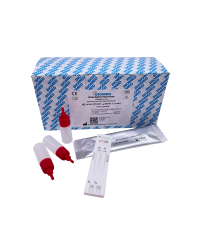
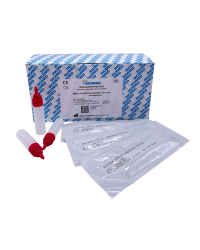
20 test cassettes incl. positive control
The RSV test is a one-step immunochromatographic test for the qualitative detection of respiratory syncytial virus antigens.
€114.64
Excl. 19% VAT ,
excl. Shipping Cost
The immunochromatographic RSV rapid test from BIOMED is a method for the qualitative detection of respiratory syncytial virus antigens in human nasopharyngeal samples (swab, nasopharyngeal lavage and aspirate) and serves as a diagnostic tool for the detection of RSV infection in conjunction with clinical presentation
Respiratory syncytial virus (RSV) is responsible for acute respiratory infections in infants and young children, which can lead to hospitalization due to bronchiolitis, pneumonia or tracheobronchitis, especially in infants in the first three months of life. In order to contain the spread of RSV and protect at-risk groups, early detection of the pathogen using an RSV rapid test is essential.
The RSV rapid test is a ready-to-use test kit for easy application in the nasopharynx. The result is generated within 10 to 15 minutes as a qualitative lateral flow assay with specific antibodies.
The RSV rapid test is intended exclusively for professional laboratory diagnostics in medical facilities and is not sold to private individuals.
RSV Test -Leistungsdaten
Respiratory syncytial virus: sensitivity: 95 %, specificity: > 99 %
RSV test - All advantages at a glance
- Rapid detection and containment of disease outbreaks
- Simple and safe handling in just a few steps
- Ready-to-use sample preparation kits
- Result readable after 10 - 15 minutes
- Billable according to GÖA and EBM
Respiratory syncytial virus:
Respiratory syncytial virus (RSV) is a single-stranded (ss), negatively oriented (-), unsegmented RNA virus from the Pneumoviridae family (genus Orthopneumovirus). It has a double-layered lipid envelope in which glycoproteins are embedded, including a fusion (F) protein and an adhesion (G) protein. There are two groups of RSV, group A and group B. These differ in the antigen structure of the G protein. Virus strains of both groups circulate simultaneously, but RSV A dominates in most years.
Virus replication takes place in the ciliated epithelial cells of the mucous membranes of the respiratory tract. The epithelial cells are reversibly damaged by syncytia formation caused by the F protein and the body's own immune response. The resulting cell detritus, migrating non-specific and specific defense cells and mucus obstruct the bronchi. This favors the development of non-ventilated, but also compensatory over-ventilated lung areas. The infection is usually self-limiting and the epithelial cells regenerate within 4-8 weeks.
RSV is a globally widespread pathogen of acute upper and lower respiratory tract diseases at any age and one of the most important pathogens of respiratory tract infections in infants, especially premature babies and small children. RSV infections are similar to influenza in terms of seasonality and symptoms. Their prevalence in the general population has long been underestimated. However, according to current estimates by the RKI, RSV respiratory diseases occur worldwide with an incidence of 48.5 cases and 5.6 severe cases per 1,000 children in the first year of life.
| Parameter | Respiratory syncytial virus antigen |
|---|---|
| Packaging unit | 20 test cassettes incl. positive control |
Related Products
Check items to add to the cart or

