



Orders placed before 12 noon
are usually dispatched on the same day (no dispatch on Fridays)
PCT Rapid Test – Quantitative Procalcitonin
EAN: 06974464591395
Article number
5074C4X025
Packaging unit
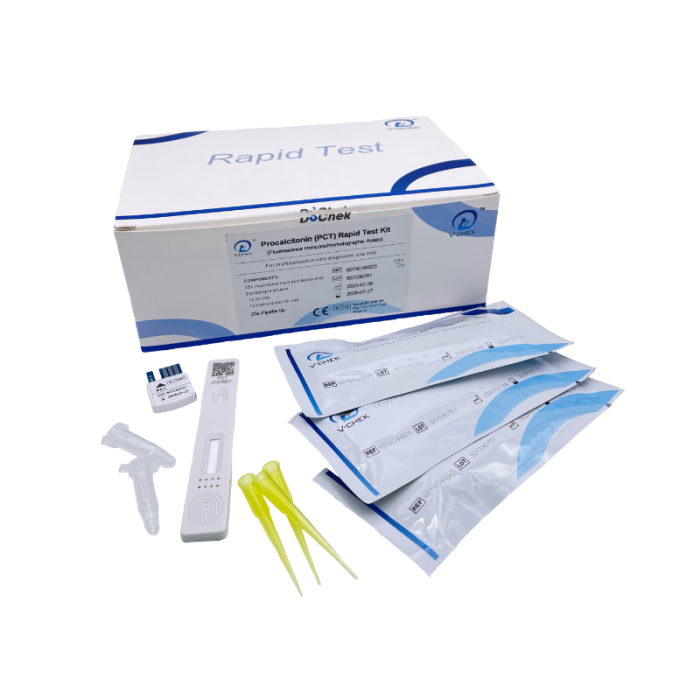
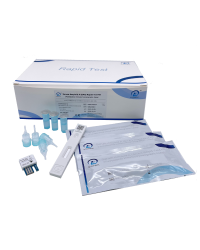
25 test cassettes, 25 pipette tips, 1 ID chip, sample dilution buffer
Quantitative PCT rapid test for measurement of procalcitonin in serum, plasma and whole blood using the BIOspeed analyzer. Results available after 15 minutes.
€210.00
Excl. 19% VAT ,
excl. Shipping Cost
PCT Rapid Test Kit for Quantitative Measurement of Procalcitonin
The PCT Rapid Test Kit enables the quantitative measurement of procalcitonin (PCT) in human serum, plasma and whole blood. Procalcitonin is an important biomarker in the assessment of systemic bacterial infections and suspected sepsis.
Quantitative measurement is performed using the BIOspeed analyzer. After an incubation time of 15 minutes, a quantitative PCT result is available. The PCT rapid test is therefore suitable for healthcare settings where procalcitonin needs to be measured promptly and close to the patient.
What Is Procalcitonin (PCT)?
Procalcitonin is the precursor of the hormone calcitonin. Under normal physiological conditions, PCT is mainly produced by the C cells of the thyroid gland and subsequently processed into calcitonin. Circulating concentrations of procalcitonin are therefore normally low.
During a pronounced systemic bacterial infection, however, procalcitonin can be produced in increased amounts by different tissues and released into the bloodstream. As a result, PCT concentrations may rise considerably.
This response makes procalcitonin an important laboratory biomarker in the assessment of systemic bacterial infections and sepsis.
When Is PCT Measurement Useful?
Measurement of procalcitonin can provide additional diagnostic information, particularly when a systemic bacterial infection is suspected.
Typical clinical applications include:
- suspected systemic bacterial infection
- diagnostic assessment of suspected sepsis
- assessment of severe bacterial infections
- monitoring the course of systemic infections
- additional information when assessing the response to treatment
The clinical context is always essential. A PCT result alone neither confirms a bacterial infection nor establishes a diagnosis of sepsis. Likewise, a low PCT concentration cannot exclude a bacterial infection in every clinical situation.
PCT results should therefore be interpreted together with the patient's clinical condition, other laboratory parameters and, where appropriate, microbiological findings.
What Is the Role of PCT in Sepsis?
Sepsis is a life-threatening organ dysfunction caused by a dysregulated host response to infection. When sepsis is suspected, rapid clinical assessment, identification of the source of infection and timely diagnostic testing are essential.
Procalcitonin can provide additional information, particularly when a systemic bacterial infection is suspected. In the appropriate clinical context, higher PCT concentrations may be associated with a more pronounced systemic response to bacterial infection.
PCT should not, however, be used as a stand-alone marker for sepsis. Results are interpreted together with the patient's clinical condition, vital signs, organ function, other laboratory parameters and microbiological findings.
PCT and CRP – What Is the Difference?
Procalcitonin (PCT) and C-reactive protein (CRP) provide different diagnostic information.
CRP is an acute-phase protein that increases in response to a wide range of inflammatory processes. Elevated CRP concentrations can occur in bacterial infections as well as in many other infectious and non-infectious inflammatory conditions. CRP is therefore widely used to assess and monitor inflammatory activity.
PCT is particularly relevant in the assessment of systemic bacterial infections. In the appropriate clinical context, an increase in PCT can provide additional information about a systemic response to bacterial infection.
PCT is therefore not simply a better alternative to CRP. The two biomarkers reflect different aspects of the inflammatory response and may provide complementary information depending on the clinical question.
Can PCT Distinguish Between Bacterial and Viral Infections?
PCT can support the clinical assessment of an infection, but it should not be used as a stand-alone test to reliably distinguish bacterial from viral infections.
PCT concentrations can increase substantially in pronounced systemic bacterial infections, while concentrations often remain lower in many viral infections. However, this distinction is not absolute.
The timing of measurement, site and extent of infection, stage of disease and individual patient factors can all influence PCT concentrations. Results should therefore always be interpreted in conjunction with the clinical findings and additional diagnostic information.
Why Can Serial PCT Measurements Be Useful?
In patients with severe infections, the course of a biomarker over time can provide additional information beyond a single measurement.
Serial PCT measurements can show whether the concentration is increasing, remaining stable or decreasing. These changes can be assessed together with the patient's clinical course and other diagnostic findings.
PCT kinetics may also be incorporated into defined antibiotic stewardship strategies. In this setting, PCT is not considered in isolation but as one component of a clinical decision-making algorithm.
How Should PCT Results Be Interpreted?
Procalcitonin is a diagnostic biomarker and should not be used as the sole basis for diagnosing a particular disease.
A low PCT concentration does not reliably exclude a bacterial infection. This may be particularly relevant during an early stage of infection or in localized infections.
Conversely, elevated PCT concentrations may also occur in clinical situations other than bacterial infection. Medical history, clinical findings and additional laboratory and, where appropriate, microbiological investigations therefore remain essential for interpretation.
Benefits of the PCT Rapid Test Kit
- Quantitative measurement of procalcitonin (PCT)
- Suitable for serum, plasma and whole blood
- Result after 15 minutes
- Supports the assessment of systemic bacterial infections and sepsis
- Timely PCT measurement close to the patient
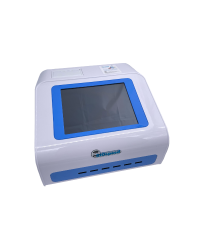
- Quantitative analysis using the BIOspeed analyzer
- Compatible with BIOspeed Single and BIOspeed Multi
- Can be combined with additional inflammatory biomarkers
How Does the Quantitative PCT Rapid Test Work?
The PCT Rapid Test Kit is based on a fluorescence immunochromatographic assay using a double-antibody sandwich method.
Procalcitonin in the sample first binds to fluorescence-labelled anti-PCT antibodies. The resulting immune complexes migrate along the test membrane and bind to another anti-PCT antibody immobilized on the test strip.
The amount of fluorescence detected at the test line increases with the amount of PCT present in the sample. The BIOspeed analyzer measures the fluorescence signal and uses it to quantitatively determine the PCT concentration.
Lot-specific calibration data are stored on the ID chip and used by the BIOspeed analyzer to calculate the PCT concentration.
Performance Characteristics of the PCT Rapid Test Kit
Parameter: Procalcitonin (PCT)
Measurement: Quantitative
Sample material: Serum, plasma or whole blood
Sample volume: 75 µL serum, plasma or whole blood
Sample application: 75 µL of the prepared sample
Test principle: Fluorescence immunochromatographic assay
Analysis: BIOspeed Single or BIOspeed Multi
Incubation time: 15 minutes
Kit contents: 25 test cassettes, sample dilution buffer, 25 pipette tips and 1 ID chip
Measure PCT, CRP, IL-6 and SAA with BIOspeed
In addition to PCT, further quantitative tests are available for the BIOspeed analyzer system to support different diagnostic questions in inflammation and infection diagnostics. These include CRP, Ferritin, IL-6 and SAA.
The biomarkers provide different information about the inflammatory response. PCT is particularly relevant when assessing systemic bacterial infections. CRP is widely used to evaluate inflammatory activity, while IL-6 and SAA provide additional information about different aspects of the inflammatory response.
The choice and combination of biomarkers depend on the individual clinical question. In complex clinical situations, evaluating several parameters together may provide additional diagnostic information.
Quantitative PCT Results in 15 Minutes with BIOspeed
The PCT Rapid Test Kit enables quantitative measurement of procalcitonin within 15 minutes. Serum, plasma and whole blood can be used as sample material.
Timely availability of a quantitative PCT result can support healthcare professionals when rapid diagnostic assessment is required in patients with suspected severe bacterial infections.
Further quantitative rapid tests and the corresponding analyzers are available in the BIOspeed Analyzers and Rapid Test Kits category.
Frequently Asked Questions About the PCT Rapid Test
What Does the PCT Rapid Test Measure?
The test quantitatively measures the concentration of procalcitonin (PCT) in human serum, plasma or whole blood.
How Long Does the PCT Rapid Test Take?
The incubation time is 15 minutes. The PCT concentration is then quantitatively determined using the BIOspeed analyzer.
Which Samples Can Be Used for the PCT Rapid Test?
Human serum, plasma and whole blood samples are suitable for the PCT Rapid Test Kit.
What Is Procalcitonin Measured For?
PCT is an important diagnostic biomarker used particularly in the assessment of systemic bacterial infections and suspected sepsis. Results should always be interpreted together with the patient's clinical condition and other laboratory findings.
Is PCT the Same as CRP?
No. CRP is a broader marker of inflammatory activity, whereas PCT provides additional information particularly in the assessment of systemic bacterial infections. Depending on the clinical question, the two biomarkers can provide complementary information.
| Parameter | PCT |
|---|---|
| Packaging unit | 25 test cassettes, 25 pipette tips, 1 ID chip, sample dilution buffer |
Related Products
Check items to add to the cart or

